 11976 trees planted
California Heat Pump Rebates and Incentives Guide for 2026
If you have been putting off a heat pump upgrade because of the price tag, you are not alone. Heat pumps cost more upfront than a straight gas furnace replacement, and for many Bay Area homeowners, that gap has been the only reason they are still running an older gas system. California heat pump rebates can close a lot of that gap, but the incentive landscape changed significantly heading into 2026, and a program that was generous last year might be paused or fully booked today.
This guide walks through what is actually available right now, what recently ended, and how to make sure you are not planning your budget around a rebate that is no longer on the table.
What Changed for 2026
For the past few years, California homeowners could combine a federal tax credit with state and utility rebates to bring down the cost of a heat pump significantly. That is no longer the case. The federal government’s 25C Energy Efficient Home Improvement Credit, which offered 30 percent back on a qualifying installation up to $2,000 a year, ended for any equipment placed in service after December 31, 2025. If your heat pump was installed and running before that date, you may still be able to claim it on your 2025 taxes. For anything installed in 2026, that credit is off the table.
This shift makes it more important than ever to understand exactly what state and utility programs remain open in your area before you commit to a project timeline.
California’s TECH Clean CA and HEEHRA Rebates
The TECH Clean California program, run through the California Energy Commission, has offered rebates for qualifying heat pump installations of up to $4,000 for standard systems and up to $5,000 for systems using low global warming potential refrigerant, with higher amounts for income-qualified households through the High-Efficiency Electric Home Rebate Act, known as HEEHRA.
Here is the part that matters most right now: as of early 2026, single-family HEEHRA rebates are fully reserved statewide, and the program has stopped accepting new income verification applications. Homes in Northern California can be placed on a waitlist in case more funding opens up, but a waitlisted project only qualifies for a rebate if the heat pump goes in after the reservation gets approved. TECH Clean California is also no longer accepting new reservations for its standard heat pump HVAC incentives.
None of this means the money is gone forever. Funding cycles reopen, and waitlists do move. It does mean you should confirm current status with an enrolled contractor before counting on a specific dollar amount.
PG&E and Local Utility Rebates
PG&E periodically offers rebates and instant coupons on energy-efficient equipment through its Golden State Rebates program, along with financing options for larger heating and cooling upgrades. A dedicated cash rebate specifically for heat pumps is not consistently listed on PG&E’s current rebate page, so it is worth asking your contractor to check what is active at the time you book your installation rather than assuming a fixed amount.
Some Santa Clara County cities, including San Jose and Sunnyvale, have offered smaller supplemental incentives tied to local electrification goals in the past. These come and go with city budgets, so treat them as a bonus to look into rather than something to plan around.
How to Check What You Still Qualify For
Confirm your area median income: Your household income relative to your county’s area median income determines HEEHRA eligibility, and the income limits update every year.
Ask about waitlist status before scheduling: If HEEHRA funding is reserved in your region, ask your contractor whether a waitlist reservation is worth pursuing given your project timeline.
Get current utility numbers in writing: Utility rebate amounts and eligible equipment change throughout the year, so get written confirmation of what applies to your project at the time of installation, not what applied last year.
Keep your paperwork either way: Hold onto receipts, equipment efficiency ratings, and contractor licensing information. Even without the federal credit, this documentation matters for warranty claims and any future incentive programs.
Working through these steps with a contractor who installs heat pumps regularly is the fastest way to find out what you actually qualify for, instead of chasing programs that closed months ago.
That is exactly where TRIO Heating, Air & Plumbing comes in. As the only Daikin 3E Partner in California, our team stays current on which rebates are open, which are waitlisted, and how to stack whatever is available for your specific home. We handle the rebate paperwork where we can and make sure your installation meets the efficiency requirements each active program requires. Contact us online to find out what is realistically available for your heat pump upgrade this year.
FAQs About Heat Pump Rebates in California
What heat pumps qualify for rebates in California?
Most rebate programs require the heat pump to meet ENERGY STAR or CEE high-efficiency tier requirements for its category. Standard split systems and cold climate heat pumps from major manufacturers typically qualify, but the exact efficiency threshold depends on which program you are applying through. Your contractor can confirm eligibility for the specific unit you are considering before installation.
Are there rebates for heat pumps in California right now?
Some are open and some are not. TECH Clean California and HEEHRA rebates are largely reserved or waitlisted statewide as of early 2026, while utility rebates through providers like PG&E change throughout the year. Checking current availability with an enrolled contractor before you schedule installation is the only reliable way to know what applies to your project.
Is there still a federal tax credit for heat pumps in 2026?
No. The federal 25C tax credit ended for any heat pump placed in service after December 31, 2025, under recent federal tax legislation. If your installation happened before that date, you may still be able to claim it on your 2025 return, but installations in 2026 do not qualify for this credit.
Gas vs. Electric Heat Pump: Which Is Right for Your Bay Area Home?
When a heating system reaches the end of its life, Bay Area homeowners face a decision they may not have anticipated: replace it with gas or make the switch to electric? The instinct is often to replace like for like. Gas furnaces have been the standard for decades, and the process is familiar. But the Bay Area’s mild climate, rising utility rates, and California’s push toward electrification have shifted the calculation considerably. What felt like the obvious choice five years ago may not be the best move today.
If your furnace or heat pump is due for replacement, understanding what separates a gas system from an electric one and what that difference means in a Bay Area home is the right place to start.
How Gas and Electric Heat Pumps Work Differently
A gas furnace generates heat by burning natural gas. It’s effective in cold climates where outdoor temperatures drop well below freezing because the combustion process produces heat regardless of what’s happening outside. An electric heat pump works differently: it transfers heat from the outdoor air into your home rather than generating it from fuel. In a warm or moderate climate, that process is highly efficient, because there’s enough heat energy in the outdoor air even on cool days to move indoors.
Bay Area winters rarely push below freezing for extended periods. That puts the region squarely in heat pump territory, where the transfer method is more practical than combustion heating for most homes.
How the Two Systems Compare for Bay Area Homeowners
There’s no universal answer, because the right choice depends on your home’s electrical capacity, your current setup, and how you weigh upfront cost against long-term operating costs. But the comparison between gas and electric is fairly consistent across the Bay Area on a few key points.
Efficiency
Heat pumps move heat rather than create it. For every unit of electricity they consume, a well-functioning heat pump can deliver two to four units of heating energy. A gas furnace burns fuel to generate heat, and some energy is always lost in the combustion process. In a climate as mild as the Bay Area’s, heat pumps hold a clear efficiency advantage across most of the heating season.
The U.S. Department of Energy notes that heat pumps can be significantly more efficient than traditional gas furnaces in moderate climates, which covers the majority of Bay Area conditions from November through March.
Operating Costs
California electricity rates are among the highest in the country, which is a legitimate consideration. However, because heat pumps are two to four times more efficient than gas furnaces at delivering heat, the operating cost comparison often stays close, particularly when you factor in that a heat pump handles both heating and cooling in one unit. Replacing both a furnace and a separate AC with a single heat pump changes the math considerably.
Environmental Direction
California has set aggressive goals for reducing gas appliance use in existing homes, and new construction in many cities is now required to go all-electric. Local and state incentive programs are funded specifically to accelerate the shift. A heat pump produces no direct combustion emissions on-site, which aligns with where California energy policy is heading, and may factor into future resale value as electrification requirements expand.
When a Gas Furnace Still Makes Sense
Heat pumps aren’t the right fit for every situation. If your home’s electrical panel doesn’t have capacity for a heat pump installation, adding a panel upgrade increases the project cost and timeline. If your home is in a part of the Bay Area that sees unusually cold winter nights, a larger heat pump system or a backup heat source may be needed. And if your current gas furnace has several good years left and your budget doesn’t support a replacement now, a maintenance visit is more practical than a premature replacement.
What About a Hybrid System?
A hybrid system pairs a gas furnace with an electric heat pump. The heat pump handles most days; the gas furnace provides backup when temperatures fall below the point where a heat pump alone runs less efficiently. This setup is worth considering for homeowners who want to reduce gas use and access rebate programs without fully giving up their existing gas infrastructure.
TRIO is a proud member of the Daikin 3E Program, the only such partnership in California, which specializes in converting gas furnace setups to work with heat pump systems. The 3E designation stands for Eco-Friendly and Enhanced Efficiency, and the program is designed specifically for homes making this kind of transition.
Get Expert Guidance from TRIO Heating, Air & Plumbing
If your heating system is due for replacement, TRIO Heating, Air & Plumbing can assess your home and walk you through which option fits your situation, budget, and goals. We’re the only Daikin 3E Program partner in the state of California, and we’ve helped hundreds of Bay Area homeowners make the switch to heat pumps with confidence. Call or schedule online to talk through your options with a member of our team.
FAQs About Heat Pumps in California
Is a gas heat or electric heat pump better in California?
For most Bay Area homes, an electric heat pump is the better long-term choice. California’s mild winters mean that heat pumps operate in their most efficient range for most of the heating season.
What is the 20-degree rule for heat pumps?
The 20-degree rule is a general guideline suggesting that heat pumps perform most efficiently when the outdoor temperature stays within about 20 degrees of the indoor target temperature. Below that range, older or smaller heat pumps may struggle to maintain output, which is why backup heating is included in many installations. Modern cold-climate heat pumps have extended that performance range significantly, and most Bay Area homeowners won’t encounter conditions that push a properly sized heat pump beyond its effective range.
Is it cheaper to heat with a gas or electric heat pump?
It depends on your home and your usage pattern. California electricity rates are higher than the national average, but heat pumps are two to four times more efficient than gas furnaces, which partially offsets the rate difference. When you factor in that a heat pump also replaces your air conditioning and that rebates reduce the upfront cost, the total cost of ownership often favors electric over the system’s lifespan. Running both numbers based on your home’s square footage and current utility rates before deciding is worth doing.
Winter Plumbing Problems: The Most Common Cold-Weather Issues in Bay Area Homes
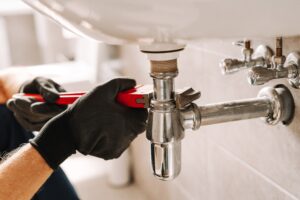
San Francisco Bay Area residents have their share of winter plumbing problems, even with the area’s moderate climate. The biggest issues come along with sewage backups, clogged drains, and frozen pipes, like contamination from wastewater, and structural damage to your home from flooding.
Let’s explore the most common plumbing issues Bay Area folks face in the winter, why pipes freeze in California, what you can do to prevent burst pipes, and when to call TRIO Heating, Air & Plumbing for expert plumbing services. Our plumbers offer high-quality repair services when you need them most, along with plumbing inspections, maintenance, and replacement.
Why Winter Causes Plumbing Problems in Bay Area Homes
It may come as a surprise to the rest of the country, but along with steady rain and all the issues wet winters bring, Californians can also face below-freezing temperatures. In fact, frozen and burst pipes are some of the most common winter plumbing problems that homeowners in the area have to handle every year.
Because homes in the area don’t have as much pipe insulation for winter weather as homes in other states do, when temperatures plummet below 32°F, the pipes in exterior walls of the house, unheated crawl spaces and garages, attics, and other cool spots are at risk. Water inside the plumbing freezes until the pipe becomes completely blocked, expanding until the pressure increase causes cracks or ruptures.
If you have any hidden leaks due to frozen pipes, you may notice signs like:
- A musty smell with no obvious source.
- Visible water stains, peeling wallpaper, or bubbling paint.
- Wet spots pooling around fixtures or appliances.
- A sudden increase in your water bill.
- Low water pressure.
The Most Common Cold-Weather Plumbing Issues
Along with frozen pipes, other common cold-weather plumbing issues in the Bay Area include:
- Stress and cracks: Underground clay soil expansion and contraction happen as temperatures rise and fall. These fluctuations can cause the ground to shift and may put stress on your plumbing system.
- Low water pressure: When your pipes start to freeze, the plumbing system in your home will become blocked with ice, restricting the flow, which leads to low water pressure in the winter.
- Clogged drains: Colder pipes can cause grease and grime in your pipes to thicken and harden faster than they normally would, resulting in more clogs than usual.
How to Prevent Frozen or Burst Pipes This Winter
The best ways to prevent frozen pipes in the Bay Area are:
Schedule Regular Plumbing Inspections
Annual plumbing inspections will allow a professional plumber to check your entire system for weaknesses like existing cracks and loose joints that could worsen over the winter. Our experienced plumbers will use modern leak detection equipment to ensure your system is safe to use, and if we find any issues, we’ll offer transparent fixes you can trust. We can also give tips on how to prevent frozen pipes in the future, so you’re prepared for next year.
Prepare Outdoor Faucets and Spigots
Disconnect all hoses and accessories from your outdoor faucet, then turn off the water to the spigot at the water line shut-off valve inside your home. Once the water’s turned off, open the faucet to let the remaining water inside the pipes drain out, then close it again. You may also want to add a faucet cover for extra protection, especially if the area is poorly insulated.
Know How to Prevent Further Damage
It’s important to know how to prevent further damage in case of a plumbing emergency. Make sure everybody in your home knows where the emergency shutoff valve is, and who to call for fast burst pipe repair in your area.

What to Do If a Pipe Freezes or Bursts
Signs of a frozen pipe include:
- Restricted or no water flow from one or more fixtures in your home.
- Frost or excess condensation on a visible pipe.
- Unusual banging or gurgling sounds from the plumbing.
In some cases, you can thaw a frozen pipe yourself. Turn the water off, then open the connected faucets to relieve pressure before applying gradual heat from a towel soaked in hot water, a hair dryer, or other gentle heat sources (not an open flame).
If you can’t do it yourself, don’t feel confident, or the pipes aren’t accessible, we’re here to help. Call TRIO Heating, Air & Plumbing, and schedule emergency plumbing service.
Other Seasonal Plumbing Issues to Watch For
Along with icy pipes, some other common cold-weather plumbing issues to look out for include:
- Heavy rains that cause moisture issues, flooding, clogging, and sewage backups.
- Increased hot water use strains the water heater, and leads to breakdowns.
- Oversaturated soil encourages tree roots to grow into pipes, leading to blockages.
When to Call TRIO for Emergency Plumbing Repair
At TRIO Heating, Air & Plumbing, we provide fast emergency plumbing repair services, arriving quickly when your plumbing problem can’t wait. This includes:
- Burst pipes and major leaks: When lots of water is flooding out of a burst or leaking pipe, it can cause serious structural damage to your home. Turn off the water at the main water valve first, then call us for immediate assistance.
- Frozen pipes: We’re available to assist you in safely thawing out your frozen pipes. Let us do it for you, so you can relax knowing professionals are taking care of the problem the right way.
- Sewage backups: While sewage backups aren’t just a winter issue, they’re more common during periods of heavy rainfall. If your drains smell foul or there’s any wastewater backing up into your home, call a professional plumber for emergency repair.
Timely action will reduce your risk of:
- Serious water or sewage damage in your home
- Costly plumbing repairs
- Health and safety risks

Protect Your Home with Winter Plumbing Services from TRIO
Contact TRIO Heating, Air & Plumbing to book your next plumbing inspection. Our state-licensed plumbers are available to ensure your plumbing system is in optimal condition. We’re happy to provide you with helpful Bay Area winter plumbing tips. We can also find the areas most vulnerable to freezing and clogs, add pipe insulation, clean your plumbing system, and prepare your home for the winter.
There’s no plumbing issue too big or too small for our experienced plumbers to handle. Call TRIO Heating, Air and Plumbing at (415) 226-4257, or send an email using our online form to get started.